18.12.06

European Cuckoo

Hasn't the same Order created Man and the Cuckoo ? (Masa Confusa)
The cuckoo is a type of grey European bird that lays eggs in others birds’ nests. When a female cuckoo is ready to lay her eggs, she finds a nest of a suitable host species and waits for the host bird to leave the nest unattended. She needs only a few seconds to fly to the nest, pick up one of the host’s eggs in her beak, and lay one of her own eggs in its place. Immediately afterwards she flies off, abandoning her offspring to the foster parents and eating the stolen egg. When the host bird returns, she usually accepts the cuckoo’s egg and incubates it with her own eggs. The cuckoo’s timing is precise, and its egg usually hatches before the host eggs. The hatchling cuckoo, with its eyes not yet open, ejects the unhatched host eggs from the nest. This process of ejection is innate. After ejecting the host’s eggs, the young cuckoo gets the undivided attention of its foster parents, which will feed and nurture it.
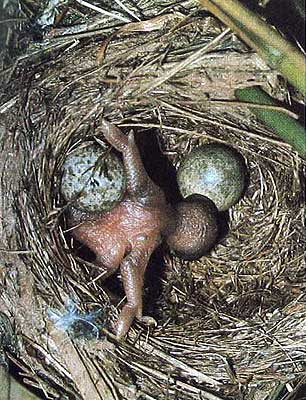

Ejection of host eggs from nest by cuckoo hatchling
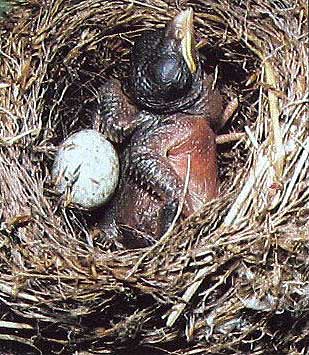


When a hatchling senses that an adult bird is near, it begs for food by raising its head, opening its mouth, and cheeping. In turn, the foster parent stuffs food in the gaping mouth. These innate behaviors are replayed over and over, even after the young cuckoo is much larger than the adults.
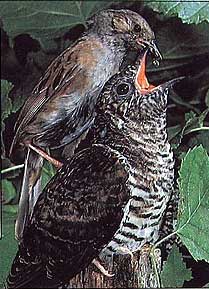

The foster mother keeps feeding the cuckoo chick

Cuckoo's research references and picture credits: Neil A. Campbell, Lawrence G. Mitchell, and Jane B. Reece, Biology: Concepts and Connections, Redwood City, California: Benjamin Cummings, 1994, pp. 720-21; Cecile Starr and Ralph Taggart, Biology: The Unity and Diversity of Life, Belmont, California: Wadsworth, 1995, p. 914.

15.12.06

Fiddler on the Roof at M.G.I.S.


"Our main goal is to learn from each other." Opening words, Prof. Beena Bhardwaj, Mahatma Gandhi International School, Manila, 15 December 2006. "The Fiddler on the Roof" performed by the M.G.I.S. students. An educational experience, both subtle and moving.


"Nuestro principal objetivo es aprender los unos de los otros". Palabras de apertura, Prof. Beena Bhardwaj. "El violinista sobre el tejado", obra representada por los alumnos de la Escuela Internacional Mahatma Gandhi, Manila, Filipinas, 15 de diciembre de 2006. Una experiencia educativa, sutil y conmovedora.

M.G.I.S. 3270 Amstrong Avenue, Merville Access Rd., Pasay City, Philippines

All photographs, videoclip and slideshow by Mariano Akerman.

7.12.06

Spot the Difference


Cool Slideshows


Details from nine of my pictures, which belong to The Argentinean Suite, Here, There, Everywhere, The Inner Constellations, and Akermania Digitalis.

For each image complete version, see Wooloo-Akermariano.

Pictures by Mariano Akerman. Copyright 2000-6. All rights reserved.

6.12.06

Metamorphosis (Bald Men)

.
The Falklands thing was a fight between two bald men over a comb.[1]
.
.
« Dios con nosotros »
Porque ese cielo tan azul que todos vemos
Ni es cielo ni es azul
Lástima grande / Que no sea verdad tanta belleza
.[2]

“God with Us”
For that sky so blue we all see
Is neither sky nor blue
Big pity / That so much beauty wouldn’t be the truth
.[3]

Gott mit Uns (Delusion of Grandeur)

.
WAR IS PEACE.
FREEDOM IS SLAVERY.
IGNORANCE IS STRENGTH.[4]

.
All animals are equal but some animals are more equal than others.[5]

Four legs good, two legs bad.[6]

.

Ay,
Qué esfuerzo el de la mosca por ser caballo.
[7]
Esfuerzo es el del puerco por ser humano.

Ah,
What an effort for the fly to become a horse
.[8]
It’s an effort for the hog to become a stallion. [9]

Tamaño esfuerzo el de las moscas por ser caballos.
Such an effort for the flies to become horses.

.

Pure {Delikatessenhandlung} and Superior {Stink}

.

Political language … is designed to make lies sound truthful and murder respectable, and to give an appearance of solidity to pure wind.[10]

.

.

Reality is always problematic
and not unquestionable.
[11]

.
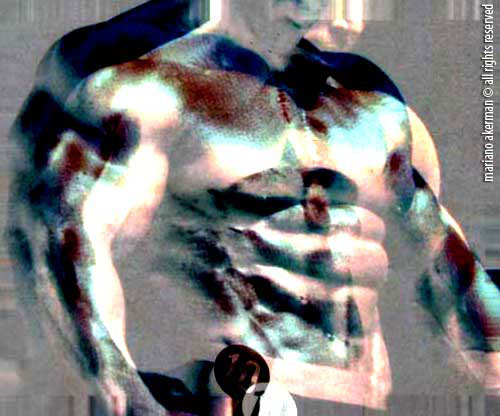
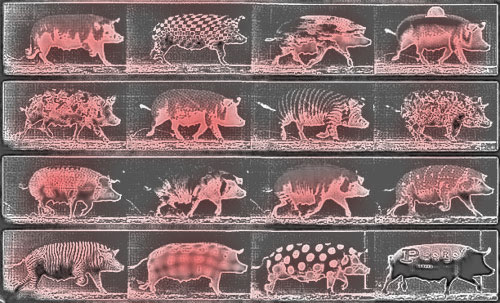
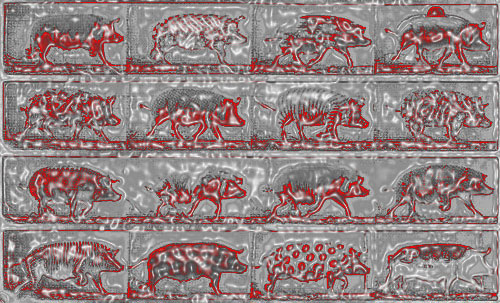
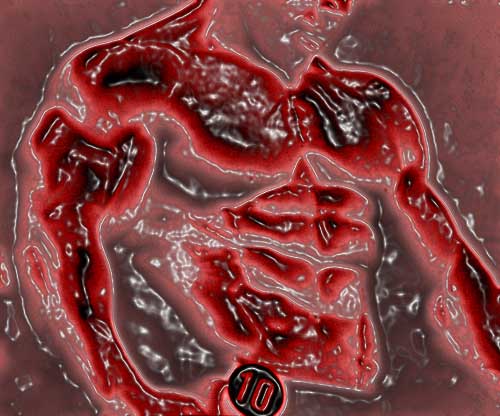
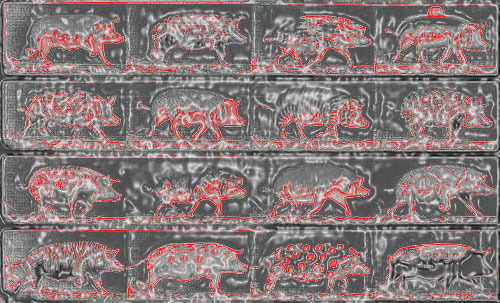
References [1] Jorge Luis Borges, Time, 14 February 1983. [2] Versos de Lupercio Leonardo Argensola (poeta español, 1559-1613). El título “Dios con nosotros” de hecho no pertenece al poema de Argensola. [3] Lines by Argensola (see above); my translation. The title “God with Us” doesn’t belong to Argensola’s poem. [4] George Orwell, Nineteen Eighty-Four, 1949, pt. 1, ch. 1. [5] Orwell, Animal Farm, 1940, ch. 10. [6] Ibid., ch. 3. [7] Paráfrasis: “qué esfuerzo [el] de la abeja por ser caballo” (Federico García Lorca, Poeta en Nueva York, 1929-30: “Muerte,” l. 6). [8] Mine is a paraphrase of Lorca’s “what an effort for the bee to become a horse.” Christopher Maurer translates it as “How hard the bee tries to become a horse” (Federico García Lorca: Selected Verse, revised ed., New York: Farrar, Strauss and Giroux, 2004, p. 266). It should be noted that Lorca does not accentuate the mode in which the bee tries to become a horse, but the very effort it takes that insect to become a quadruped. [9] Puerco and hog aren’t synonyms, neither are humano and stallion. [10] Orwell, Shooting an Elephant, 1950. [11] José Ortega y Gasset, “Ideas y Creencias,” 1934-40. Visual sources: “10,” unidentified bodybuilder; Michel Kerbow, Pigs à la Warhol, New York, 1991.

Metamorphosis (Bald Men) is a digital configuration by akermariano (Mariano Akerman); it includes six digital images, Supermann (Proximity), Pigs I-IV, and Supermann Plastified. Copyright 2006. All rights reserved.

2.12.06

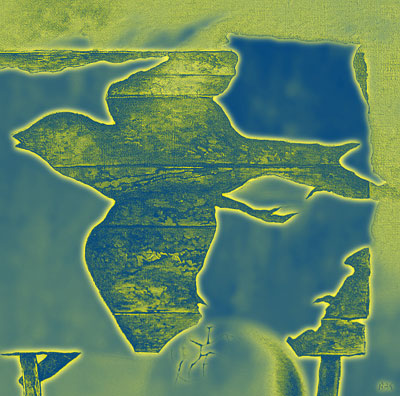
Flight Path (Painted birds); Trayectoria (Pájaros pintados)


Fly, fly high wounded dove
Fly, fly if you want to change your life
Fly before the night will cover your days
Dove of mine, my wounded dove


Cool Slideshows


click image to enlarge/resume. doble-click sobre cubo para ver detalles

Vuela, vuela bien alto paloma herida
Vuela, vuela si quieres cambiar de vida
Vuela antes que la noche cubra tus días
Paloma mía, paloma herida


The six Painted Birds are digital images by Mariano Akerman. Copyright 2006. All rights reserved. Visual source of inspiration: S. Bak, “Fugue,” 1972 (Bak: Paintings of the Last Decade, New York: Aberbach Fine Art, 1978, p. 86). Literary source of inspiration: Horacio Guaraní, “La villerita,” chamamé. Translation into the English language by Akermariano.

You may consider catching a bird and keeping it away from its covey. Add someone hurrying up to paint the recently captured bird, so to covering its feathers entirely with paint of many colors. Afterwards, the painted bird is set free. It instinctively flies towards the covey of its kin, aiming to regain its place amid the other members of the group. But, as the painted bird rejoins the covey, none of the unpainted birds recognizes the painted one. The presence of this “alien” turns the unpainted birds pretty hostile. Yet, the painted bird doesn’t understand much about what has happened to it. The closer the painted bird gets to the unpainted ones, the rougher their response. In the end, the unpainted birds attack the painted one, wounding it badly. All locals find great delight in watching the painted bird falling from the sky.

Fly, fly high wounded dove
Fly, fly if you want to change your life
Fly before the night will cover your days
Dove of mine, my wounded dove

References. The six birds presented as Trajectory are digital images by Mariano Akerman → visual source of inspiration: Samuel Bak, Fugue, 1972 (Bak: Paintings of the Last Decade, New York: Aberbach Fine Art, 1978, p. 86). The first paragraph in this post has its literary source of inspiration in Jerzy Kosiński, The Painted Bird, 1965; the second one in Horacio Guaraní, “La villerita,” chamamé: « Vuela, vuela bien alto paloma herida / Vuela, vuela si quieres cambiar de vida / Vuela antes que la noche cubra tus días / Paloma mía, paloma herida » (English translation by Mariano Akerman). In The Painted Bird, there is a professional bird catcher. When he is upset or bored, he takes one of the birds he has captured and paints it in several colors. Then he watches the bird flying through the air in search of a flock of its kin. When it comes upon the otherbirds, they see it as an intruder and wound the bird until it dies, falling from the sky. For me, the professional bird catcher is a symbol of so-called humanity and its inherent cruelty.

Kingdom and Ecology


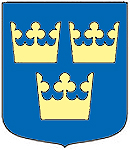
Coat of Arms of the Kingdom of Sweden


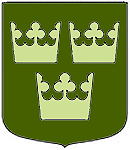
The Three Kingdoms of Nature


Each of the crowns in the Swedish coat of arms may symbolize a component of Linnaeus' favorite--Nature.

And if you could see it with Linnaeus' eyes, you'll probably find it entirely ecological.

"Nowhere abroad have I found any region richer than our land in marvels in the kingdom of nature; not one, that can boast of so many, so astounding masterpieces of nature…” (Carl Linnaeus, The Necessity of Expeditions Through Our Native Land, 1741; cited in Enchanted Land, p. 5).

These ideas should be understood in the context of the Eighteenth Century, when most Swedes knew very little about their country. Today, Linnaeus is considered a pioneer in the exploration of Scandinavia having also encouraged many of his students to explore all corners of the world.

Coming from a family of farmers and provincial priests, Linnaeus had a humble background. But this prevented in no way the Swedish monarch (Adolf Fredrik) from appreciating his contribution as a scientist. While social mobility was not uncommon in Sweden in those times, Linnaeus was himself rised to nobility in 1761. Calr Linnaeus became then Carl von Linné.

Interestingly, Linnaeus' coat of arms presents a central egg (a clear symbol of Creation) surrounded by three crowns. The crowns recall the three ones in the Swedish coat of arms. The crowns are exhibited in differently colored fields, which suggest the Three Kingdoms of Nature.

In Linnaeus' coat, the flower on top of the helmet is the Linnaea borealis, a specimen he discovered and named during his exploration of Lappland in 1732. That five-month exploration covered not only Northern Sweden, but Norway and Finland as well.

Undeniably, Linnaeus was not very good in drawing, but he had clear ideas about what he wanted. Here's his proposal on a coat of arms for his family, showing a central motif known as the "anatomic egg," the three fields symbolizing the Kingdoms of Nature, and the Linnaea borealis on top of everything.

But Linnaeus' proposal was rejected and later reformulated. As I've read elsewhere, "Carl Linnaeus (1707-1778) was a brilliant Swedish naturalist and educator who considered all of nature his classroom. Like a botanical prophet, he would lead students on long excursions through woods and countryside, reeling off colorful anecdotes and observations on plants, insects and vertebrates. He eventually collected over 14,000 sheets of pressed plants and thousands of insect specimens. [...] Centuries after his death, Linnaeus is most honored for his revolutionary plant and animal naming system of binary Latin nomenclature: one name indicating the genus and the other the species."

Picture credits. Mineral Kingdom: “Sunset, Ramvikslandet, Bohuslän, 27 February 1997,” by Jan-Peter Lahall (Enchanted Land: Pictures from Nature in Sweden, Örebro: Jan-Peter Lahall, 1999, p. 18). Vegetable Kingdom: “Aesculus pavia,” by Edvard Koinberg (Gunnar Broberg, Carl Linnaeus, Stockholm: The Swedish Institute, 2006, p. 21). Animal Kingdom: A Tengmalm´s Owl Chick (“Owls, Hälsingland,” detail), by Håkan Vargas S. (Copyright Håkan Vargas S. / Swedish Travel & Tourism Council).


RELEVANCE OF LINNAEUS IN TODAY’S WORLD
by Shalakha Sanalkumar
Mahatma Gandhi International School, Manila

I agree with Linnaeus’ maxim stating that "All excess is harmful". Indiscriminate felling of trees results not only in the destruction of the natural habitats of animals and other living things but also disturbs the climate resulting in freak weather which may cause natural disasters like typhoons, tornadoes and tsunamis. Excessive industrialization has resulted in global warming which threatens the future of our planet. There is diversity in nature and certain areas are blessed with abundant trees, rainfall and other flora and fauna while certain areas have a different climate. I agree that “Nature always compensates for a disadvantage by an advantage elsewhere”. When Carl Linnaeus went to Lapland, which is a very cold place, he saw reindeers which adapt to that harsh climate and also provide for the needslike food, clothing andtransportation for the people living there. In other places, such as deserts, extreme heat and scarcity of water make them uninhabitable. But the camel and the cactus plant adapt to this condition and an oasis is created in the middle of the wilderness, with fresh water and plants, which is indeed a miracle of nature. This supports the maxim of Carl Linnaeus. All forms of life like plants, animals and humans have been created to share this planet and maintain its ecological balance. But human beings, in their greed and quest for modernization, have disturbed this balance. We are only to be blamed for dumping waste, chemicals, sewage into the rivers making it non drinkable and even unsafe for contact. We have changed forests (which like our lungs provide pure air to us) into farmland and expand our cities. This leads to extinction of animals, causes landslides, floods and threatens all forms of life. Life is precious and we must preserve it by maintaining its ecological harmony and balance.


Online resources
In the Spirit of Linnaeus
Linnaeus-Manila Program
Brochure
Linneo
What a century!
Rara avis
The Same Order
El mismo orden
Education: In the Spirit of Linnaeus

Flying Being


Visual source of inspiration: Samuel Bak, “Fugue,” 1972 (Bak: Paintings of the Last Decade, New York: Aberbach Fine Art, 1978, p. 86). The Flying Being is a digital image by Mariano Akerman.