20.10.06

The artist's view


Philippinesque / Filipinesca
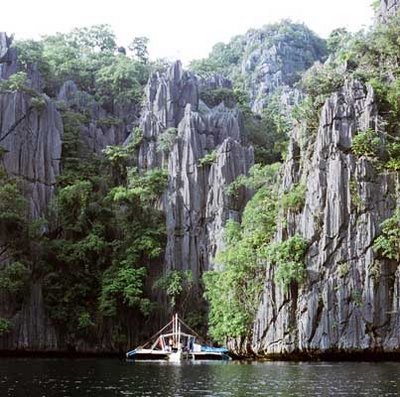
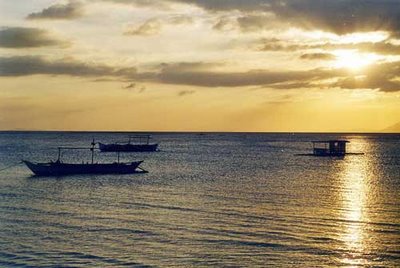
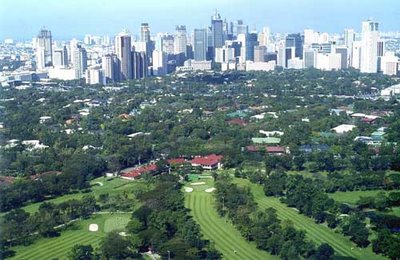
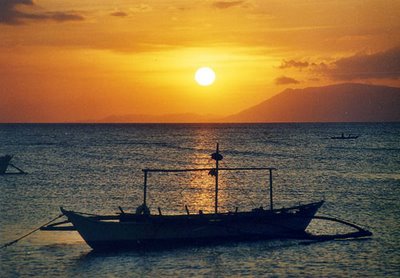
A selection of pictures by akermariano, Philippines 2006


Sunrise


Boracay

A new friend

El Nido

Calachuchi flowers

Coron


Pagudpud

Merienda Time

Manila


Sunset

Copyright: akermariano. All rights reserved.

7.10.06

Iridescent Philippines


Remember "showing changing colors as light falls" and "truly rainbow-colored"? Well, this is Philippines.


Mariano Akerman, Philippines Iridescent | Iridiscente Filipinas, 2006

A few ideas by José Rizal (1861-1896), the Philippine National Hero, multilingual medical doctor, poet, novelist, sculptor, painter, naturalist and fencing enthusiast, who was also the author of "El sentimiento de lo bello" (The Feeling of the Beautiful), 1882:

“Dado por Dios al hombre y por el hombre perfeccionado […] es el sentimiento de lo bello. […] El que previó la desigualdad y la vana suerte entre los hombres, les dio este dulce sentimiento.” El hombre “adivina lo delicado” cuando en él se presenta el sentimiento de lo bello. / En el camino de la vida el sentimiento de lo bello es la única planta sin espinas. / “Queriendo darle forma [a tal sentimiento], expresarle, hallar para él al símbolo, una vestidura, el hombre inventó las bellas artes.” / Un recuerdo querido, una poesía tenue y delicada, un canto del corazón[, … ] los pocos momentos felices de la vida” son conservados por el arte, la más universal de las concepciones de los hombres.

Translation: Given by God to man and perfected by the latter one is the feeling of the beautiful. The One who designed the inequality of men and their ephemeral condition, gave them this tender feeling as well. Along the road of life, the feeling of the beautiful is the only plant with no thorns. Willing to give shape to such a feeling, to express it, to find the symbol for it (a dress), man invented the fine arts. / A cherished recollection, a delicate piece of poetry, a song from one’s heart, the few joyous moments of life—all of them are preserved by art, the most universal of men’s conceptions.

Several stimulating reasons have brought me to Rizal’s beloved country, where I reside since 2003. This is a land of fiesta and siesta, water buffalo and tarsiers, sampaguitas and meriendas, tons of rice and colorful fish, delicious mangoes, captivating calachuchies, 70.000.000 of people and a jeepney called El Shaddai. Here, in the more than 7.000 islands of the Philippine archipelago, the breathtaking impact of the sun can easily make most landscapes here wholly iridescent. Well, at least this is supposed to happen when you see them with the eyes of the artist…

PHILIPPINES IRIDESCENT Copyright © Mariano Akerman | The beautiful. Jose Protasio Rizal, 1861-1896. White Beach, Boracay. Chocolate Hills, Bohol. Hidden Valley, Alaminos. Rice Terraces, Banaue, Ifugao. El Nido and Underground River, Palawan. Whale shark / Butanding, Donsol. Philippine jeepney. Taal Volcano, Tagaytay. Nature and Culture. Filipiniana. Digital art. Communication. Dialogue. Art appreciation. Education.


William Carlos Williams, "Patterson," 1946-48, bk 4

A dissonance
in the valence of Uranium
led to the discovery

Dissonance
(if you're interested)
leads to discovery


Tarsier | Tarsio

Una disonancia
en la valencia del Uranio
llevó al descubrimiento

Disonancia
(si te interesa)
conduce a descubrir

_____

Akermariano (Mariano Akerman), Architect, Art Historian, Painter, Researcher, Curator, Lecturer. Born in Buenos Aires in 1963. Specializes in Visual Communication. EDUCATION: Architect (1987) and Art Historian (1999). ART EXHIBITS: 1979 Ministerio de Educación, Argentina. 1984 Casa de la Pintura Argentina, Buenos Aires. 1986 Galería RG en el Arte, Buenos Aires. 1987 International Arts Exhibition, Shizuoka, Japan. 1988 Universidad de Belgrano, Buenos Aires; Feria de las Artes, Barcelona, Spain. 1989 Alliance Française de Buenos Aires; Galerías Pacífico, Buenos Aires; Fundación Cultural Banco de Boston, Buenos Aires. 1990 Centro Cultural San Martín, Buenos Aires; Banco Federal Argentino, Buenos Aires; Galería de Arte Contemporáneo, Buenos Aires; Banco Holandés Unido, Buenos Aires. 1991 Galería Saint Margaret, Buenos Aires. 2003 Oakwood Premier Ayala Center, Manila, Philippines. 2005 The National Museum, Manila; Alliance Française de Manille. 2006 Ateneo de Manila University. 2007 Residence of Sweden, Manila. 2008 IFWA Center, Islamabad. AWARDS: 1979 Cantegril Painting Award, Punta del Este, Uruguay. 1980 Consejo Nacional de Educación Prize, Argentina. 1983 The Berlinerblau Prize in Graphic Design, Buenos Aires 1987-88 Two Distinctions in Architecture, Universidad de Belgrano 1988 Banco Francés del Río de la Plata Incentive Award. 1989 Distinction "Bicentennaire de la Révolution Française," Alliance Française de Buenos Aires. 1991 ABN-AMRO Bank Visual Communication Prize, Amsterdam. 1995 British Council Grant in Art History, London. 2005 Embassy of Belgium in Manila Laborum Praemia (Art-Appreciation Lectures, Art Show and Magritte Competition). 2006 Ateneo de Manila University Diploma in Argentinean Culture Diffusion. 2007 University of Santo Tomas Token of Friendship, Manila; Lyceum of the Philippines University Certificate of Appreciation in the Sciences and Arts, Intramuros; De La Salle University Token of Friendship; M.G.I.S. Prize in Interdisciplinary Education, Pasay City; Ateneo de Manila Token of Friendship; Feati University Token of Appreciation in Architectural Studies, Santa Cruz, Philippines; Embassy of Sweden in Manila Certificate and Laborum Praemia (The Linnaeus-Manila Lectures and Competition Program).

12.9.06

Mariano Akerman: Artwork 1989-1990


In 1988 and 1989, I participated in the two Youth Art Competitions organized at the C.N.H. In both of them my pictures were prized.1

It was in 1989 that at work I met Noemí Suárez, who had studied art history like me.2 She once brought me her Dictionary of Symbols, so that I could have a look at it.

1 Dictionary of Symbols: Shields with hybrid motifs

On July 4th, 1989 my drawing Homage to the French Revolution was shown at the “Salon Bicentennaire de la Révolution Française” in Galerie d’Art La Porte Ouverte (Alliance Française de Buenos Aires, Centro Fortabat). This drawing is also known as “Minutos antes de la Revolución” (Some Minutes before the Revolution). It is characterized by the precarious balance of its Ledoux-inspired architecture.3

2 Mariano Akerman, Homenaje a la Revolución Francesa (Homage to the French Revolution), 1989

3 « Bicentennaire de la Révolution Française » Logo, July 1989

Andrea Gobbi, who had studied Architecture with me, suggested I might have an art show at the Bank of Boston Cultural Foundation. And so it was. Inaugurated in October 1989, “Ten Paintbrushes through Deep Waters” included new works such as Your Honour—A Real Lady, Three Figures by the Window, and The Way I love You.4

4 Mariano Akerman, Bank of Boston Cultural Foundation Poster, 1989

5 Mariano Akerman, Your Honour, Una Auténtica Lady (A Real Lady), 1989

6 Diario del Viajero, Buenos Aires, 11 October 1989, p. 1

7 Mariano Akerman, Tres a la Ventana (Three by the Window), 1989

Three by the Window was described by art critic Teresita Pociello as a work with a mobile structure recalling Miró.5 According to her, the final result of the picture is “americanista” (because it epitomizes the imaginative qualities born in the American continent).6

8Teresita Pociello, “Mariano Akerman,” Óleo y Mármol, Buenos Aires, 12-23 September 1989, p. 3

A reproduction of Miró’s Personage and Dog before the Sun (1949) was hanging in my bedroom as I was a child.7 Pociello did not know it though.

9 Joan Miró, Personage and Dog before the Sun, 1949

While I agree with Pociello’s observations, let’s add that Three by the Window was also a visual comment on Francis Bacon’s Three Studies for Figures at the Base of a Crucifixion (1944-45). That triptych was known to me via The Tate Gallery Illustrated Companion, a catalog my mother had brought to me from London in 1981.8

10 Tate Gallery Companion: Francis Bacon’s Three Studies for Figures at the Base of a Crucifixion, 1944-45

A colleague artist, Zulema Vaini, pointed out that I projected my inspiration in select images, giving my work the mysterious charm of things seldom seen by the human eye.9 Such words were a compliment. I think they do also apply to Odilon Redon.

11 Odilon Redon, Centaur, c. 1890s

Ten Paintbrushes through Deep Waters was inaugurated with special remarks by Bettina Sandrini: There is a precise and delicate line in his artwork. The fresh way in which he handles watercolor produces colorful results. As he depicts forms and details, his inner richness is expressed in terms of joy. In this way, his personages dream and grow up under skies specially created by him to convey a better world he aspires to. In a patient and silent distillation, he innovates in the visual arts.10

12 Mariano Akerman, ¡Cómo te quiero! (The Way I Love You), 1989

13 “Aguas Profundas,” El Cronista Comercial, Buenos Aires, 27 September 1989, sect. 2, p. 1

Crystalline was much celebrated as it was exhibited in the Italian Association of Buenos Aires. It was also shown in the Salon of Argentinean Painting in Galerías Pacífico, where it received a diploma in December 1989.11
Between February 1989 and May 1990, I was a member of the Latin-American Association of Artists and participated in twenty-two collective shows, ending my works often awarded.12 One of the jury’s favorites was Lots, Lots, Lots of Love.13 Its title was inspired by the last line of “The Gardener’s Song,” a great piece by Argentinean poetess and singer María Elena Walsh. 14

14 Mariano Akerman, Mucho, mucho, mucho amor (Lots, Lots, Lots of Love), 1989-90

In June 1990, my works were exhibited in three corners of Buenos Aires at the same time: Banco Mayo (Mariano Akerman: Continent and Content, 5-30 June 1990), Galería de las Golondrinas (Rupert) (Mariano Akerman and Erica Fabro, 7-27 June 1990), and Banco Federal Argentino (Mariano Akerman from Sun to Sun, 15-31 June 1990).15

15 Mariano Akerman, Banco Mayo Exhibition Poster, 1990

16 Mariano Akerman, Galería de las Golondrinas Exhibition Leaflet, 1990

In August 1990, Hilda Chanca from the John F. Kennedy University interviewed me. We talked about the limited opportunities Argentina had to offer to young artists then. I commented artists had fortunately learned how to extract water from rocks. She asked me whether the conjunction artist-architect was something unusual and I recalled Michelangelo, Le Corbusier, and Clorindo Testa. She also saw a possible link between animation and my artwork. I referred to Walt Disney, his talent and creativegenius.16 During the interview, I hinted at the illustrations of John Tenniel for Carroll’s literary work, which I had discovered in 1976.17

17 Hilda Chanca, “Un joven pintor,” Clubs & Countries Comunitarios, No. 15, September 1990

18 Mariano Akerman, Sacar agua de las piedras (To Extract Water from the Rocks), 1984-88

19 John Tenniel, Alice and Humpty Dumpty, 1872

The idea of including here an illustration of Humpty Dumpty is far from arbitrary, as one considers the kind of figures I was depicting in those days.

20 Mariano Akerman, Satisfacción (Satisfaction, see fig. 7)

21 Mariano Akerman, Raro peinado nuevo (New Strange Hairdo), 1990; 22 Mariano Akerman, Un giro moderno en mi sobriedad (A Modern Twist in My Sobriety), 1990

Because I liked Chanca very much, I took the initiative of making a special design for a study on the role of communication in the educational experience that she was going publish with one of her colleagues around that time.

23 Dolly Dolinsky and Hilda Chanca, Enseñanza-Aprendizaje: Una Experiencia Comunicacional, including Mariano Akerman, “Mandala” (1990), Buenos Aires: Universidad Argentina John F. Kennedy, 1990.

In October 1990, I had a new solo exhibit took place at the Art Gallery of Centro Cultural San Martín, one of the most important public venues in Buenos Aires.18 There, I included Lots, lots, lots of Love, The Messenger, In Movement, and Life Supporter (a tribute to Moroca, who had passed away not long before). A big automatism was also shown then. The Messengerand In Movement owed something to a globe in The Adventures of Baron Munchausen, the cinematic fantasy that was supposed to end all other fantasies.

24 Mariano Akerman, El mensajero (The Messenger), 1990

25 Still from The Adventures of Baron Munchausen (Columbia Pictures, 1988); 26 Mariano Akerman, En movimiento (In Movement), 1990

27 Mariano Akerman, Partidario de vivir (Life Supporter), 1990

Life Supporter shows a figure perhaps recalling Antoine de Saint-Exupéry’s Little Prince, except from the fact that mine stands accompanied not by a rose, but by a picture of the HIV virus (from Somos magazine). So far as I knew, Moroca had not died because of AIDS. However, when I was making this image, AIDS was the latest menace in Buenos Aires. That was an almost unbearable reality: Moroca was dead and there was AIDS all around. I depicted a Life Supporter holding a torch, as if trying toilluminate the world. This case in particular recalls an idea of Giordano Bruno: "the fictitious image contains its own truth."19
Writing from the National Museum of Fine Arts, Jorgelina Orfila indicated, "With secure hand and controlled drawing, a prolific imagination finds expression in his work. His technical knowledge intermingles with a profound introspection and an almost obsessive desire to transcend the formal and to convey deep meanings (the artist who is at once architect appears here)."20

28 Mariano Akerman, Automatismo “Para la Libertad” (Automatism), 1990

The San Martín Cultural Center catalog was designed echoing the scheme of PRIMER PLANO (foreground), a page which leading Buenos Aires newspaper La Nación devoted to a salient personality weekly. In including a portrait picture of one of my characters (Phoenix), my exhibition catalog became itself an invitation to consider an alternative possibility—Imagination.

29 Mariano Akerman, Centro Cultural San Martín Catalog, October 1990

The San Martín catalog included a telling epigraph of uncertain origin and some comments of my own. “What the tree has of flourished nourishes from that which is buried” (Lo que el árbol tiene de florido vive de aquello que tiene sepultado). This paradox was followed by a brief recollection of the circumstances relating to the emergence of my first abstract painting and reflections on the influence of Surrealism and Architecture on my work. Also indicated was the explanation that in order to create something I needed an inner oasis that can include a playful ingredient leading to fulfillment.21 The SanMartín exhibit was followed by three additional solo exhibits in Banco de la Provincia de Buenos Aires (Mariano Akerman: Paintings, 6-14 December 1990), ABN Bank Group (then Banco Holandés Unido, Mariano Akerman: Watercolors and Mixed Techniques, 17 December-31 January 1991), and Galería Saint Margaret (Mariano Akerman: Watercolors, 1-28 February 1991).22

30 Mariano Akerman, Banco de la Provincia de Buenos Aires Catalog, November-December 1990

A Sky of Projects was my solo art show at Galería Cinemateca S.H.A. in March 1991.23

31 Mariano Akerman, SHA Catalog, March 1991

The SHA exhibit included, among others, a picture with the very title of the show. A critic described this work as a mixture of figuration and abstraction, with a rich symbolism.24

32 Mariano Akerman, Cielo de proyectos (A Sky of Projects), 1990

The SHA exhibit was the culmination of the period usually referred to as "The Argentinean Years" (1963-1990). It was also the beginning of a wider horizon, one involving the spread of my artworks across three continents.

NOTES
1 Tigre, Club Náutico Hacoaj, Concurso de Pintura para Jóvenes Creadores, December 1988 and November 1989. The awarded pictures were Irreducible like Water and Lots, Lots, Lots of Love.
2 In 1988, I took the course “From Gauguin to Magritte: Reality, Abstraction and Fantasy in Contemporary Art” at the National Museum of Fine Arts, Buenos Aires. I was habitué there until 1991.
3 The designs of pre-Revolutionary architect Claude-Nicolas Ledoux fascinated me, particularly when studying the History of Architecture with Oscar Maisonave in 1986. Among my favorite architectural books, important was Christian Norberg-Schulz, Arquitectura occidental: la arquitectura como historia de formas significativas, Barcelona: Gili, 1985. Its chapter 10, “La Ilustración,” includes the imagery of Ledoux.
4 “Aguas profundas,” Cronista Comercial, 27 September 1989, sect. 2, p. 1; Diario del Viajero, year IV, no. 128, 11 October 1989: “Artes Plásticas;” Somos, 18 October 1989, p. 22: “Arte Crítica;” La Nación, 18 October 1989, sect. 3, p. 14.
5 While writing this, she possibly had in mind Miró’s The Harlequin’s Carnival of 1924 or Dutch Interior II of 1928 (H.H. Arnason, A History of Modern Art, London: Thames & Hudson, 1988, colorplates 126, 128).
6 “Mariano Akerman,” Óleo y mármol, Buenos Aires, 12-23 September 1989, p. 3.
7 Miró’s original tempera is in the Basel Kunstmuseum.
8 The Tate Gallery: An Illustrated Companion, ed. Norman Reid, London, 1979.
9 Vaini, quoted in Buenos Aires, Fundación Banco de Boston, Mariano Akerman, 18-27 October 1989.
10 Sandrini, Introductory words to Mariano Akerman’s Exhibit, 18 October 1989.
11 Buenos Aires, Asociación Italiana de Socorros Mutuos, 15 December 1989; Buenos Aires, Secretaría de Cultura de la Nación, Segundo Salón de Pintura Argentina para el Ámbito Nacional, 12-24 December 1989.
12 Each salon organized by A.L.A.P. (Asociación Latinoamericana de Artistas Plásticos) had its own catalog. Among my prized pictures were The Way I Love You (July 1989), We the Makers (June 1989),Crystalline (September 1989), Three by the Window (March 1990), and Lots, lots, lots of Love (October 1989 and May 1990).
13 This complex work was finished by October 1989; some of its details were reworked in early 1990.
14 “Canción del Jardinero” was known to me from her record Canciones para Mirar (Songs To Look At), which I had by the late 1960s. The song opens with a “Mírenme, soy feliz” (Look at me, I am happy). Its last lines are: “Yo no soy un gran señor / Pero en mi cielo de tierra / Cuido el tesoro mejor / Mucho, mucho, mucho amor” (I am not a big boss / But in my sky of earth / I take care ofthe best of treasures / Lots, lots, lots of love).
15 La Nación, 7 and 15 June 1990, sect. 3, p. 14: “Bellas Artes.”
16 I was always a fan of Disney’s movies. In 1986, after my first solo show took place, I traveled to Miami, where I bought a book on animation (Frank Thomas and Ollie Johnston, Disney Animation: The Illusion of Life, New York: Abbeville, 1984). By the time I was interviewed by Hilda Chanca I also had another one by the same authors (Too Funny for Words: Disney’s Greatest Sight Gags, New York: Abbeville,1987).
17 “Un joven pintor,”Clubs & Countries Comunitarios, No. 15, September 1990. I bought an illustrated exemplar of Carroll’s Alicia en el País de las Maravillas when I was thirteen (Punta del Este, 1976) and another one at the age of twenty-one (Buenos Aires, 1984).
18 La Nación, 6 October 1990, sect 3, p. 14: “Bellas Artes.”
19 Giordano Bruno, De vinculis in genere, 1591: “L’immagine fittizia ha la sua veritá.”
20 Buenos Aires, Centro Cultural General San Martín, Pasos, de Mariano Akerman, October 1990.
21 Ibid.
22 La Nación, 6 and 17 December 1990, sect. 3, p. 14; ” Clarín, 11 January 1991: “Galerías de Arte;” and La Nación, 4 February 1991, sect. 3, p. 14.”
23 La Nación, 9 March 1991, sect. 3, p. 14: “Bellas Artes.”
24 As had detected J.N. already in 1989 (The Buenos Aires Herald: Art).

11.9.06

Mariano Akerman: Artwork 1965-1988


I was born in Buenos Aires in 1963. When I was a little child, my aunt, Moroca, gave me my first informal art classes in her workshop, Pirouettes Studio.[1]

1 Moroca and Mariano, Taller Piruetas, Buenos Aires, 1965

She had a predilection for Surrealism and taught me the art of automatism and other procedures stimulating free association. A generous person, she shared her gouaches and brushes with me. Moroca had a good art library. She read in French (something pretty unusual in Buenos Aires in the mid-1960s). She also loved to sing after having had her siesta, and as I was working in the studio, she offered me a yogurt or glass of soda (the latter often with some paint in it too). Moroca encouraged me to explore art from the beginning, making efforts in telling me the story of art, and helping me to exhibit my work in Casa de la Pintura Argentina in 1984. She also contacted me with the owner of an art gallery in Belgrano, Mercedes Rodrigo, paving the way for my first solo exhibit at Galería RG en Arte in March 1986.[2] I remember myself interested in books since I was a little child. I had few of my own, except from an amazing, twenty-volume encyclopedia my mother had received on her ninth birthday. Its title of the encyclopedia was The Treasure of Youth.[3] As such volumes were all in my bedroom, I had direct access to them. My favorite images in them were those showing fabulous animals and Alice in Wonderland.

2 El Tesoro de la Juventud: Seres fabulosos (Fabulous Beings), U.S.A., 1947

3 El Tesoro de la Juventud: Alicia en el País de las Maravillas (Alice’s Adventures in Wonderland), U.S.A., 1947 I’ve made some drawings on the pages of my mother’s encyclopedia here and there.

4 Mariano Akerman, Patito (Duckling), 1969

I was also fond of drawing in another book, one with pictures as poignant as the ones in The Treasure of Youth. That book was Modern Art, a dictionary which was once given to my mother as a present.[4] I remember myself inspecting it while she was talking on the phone. One of the pictures in the dictionary, James Ensor’s Intrigue (1890), used to make me feel uncomfortable, but it was also so attractive that I couldn’t stop looking at it from time to time.[5] In 1967, I drew an automatism over The Intrigue, to express that was important to me and also to neutralize its grotesque masquerade.

5 Mariano Akerman, Automatismo (Automatism), 1967

Not much later, I considered a featureless sitter by Matisse to be unfinished and added all what I supposed she was longing for—eyes, nose, mouth, and eyebrows.[6]

6 Mariano Akerman, Corrección de una imagen incompleta (Correction of an Unfinished Picture), 1968

I always managed to have access to the Dictionary of Modern Painting, which was essential during my artistic formation and accompanies me even today. When I was eleven, in a school knowledge competition, I won a prize from Reader’s Digest.[7] It was a big book on The Strange, the Astonishing and the Most Extraordinary. This volume revealed me some secrets about cosmology and superstition, stimulating also my imagination. Another book I found most interesting was one on the work of the early Netherlandish painters.[8] There, I found the breathtaking imagery of Gérard David and the intriguing figures of Hieronymus Bosch.

7 Gérard David, Sisamnes’ Agony, 1498


8 Hieronymus Bosch, The Garden of Earthly Delights, c. 1505-10

I felt fear and repulsion at the sight of David’s down-to-earth realism. The opposite effect had on me the poetry of Bosch and his inventiveness.[9] In the mid-1970s, I was unaware of the complex stories behind such images.[10] My perception and intuition were all I had as I regarded them. In these images I felt two irreconcilable forces operating. Somehow, I understood that the realism of David’s Agony of Sisamnes opposed the fantasy of Bosch’s Garden of Delights.

As a teenager, once per week I had breakfast with my grandfather in a cafeteria not far from home. On my way to school, he used to buy me the weekly supplement of The Student’s Salvat Encyclopedia, which was both informative and rich in illustrations.

9 Enciclopedia Salvat del Estudiante: Trayectoria solar (Solar Trajectory), Barcelona, 1976

Moroca was also generous and often borrowed me her art manuals. Among the books she provided me with, there was a moving biography of Michelangelo, Julio Payró’s Modern Painting, and Scott’s Design Fundamentals.[11] All of them have proved to be useful and educative. Unexpected were the stimulating methods of Prof. Iglesias, my art teacher in 1979. She was known for encouraging self-expression in a period of repression (1976-83). On one occasion, she arrived with some art reproductions and asked each student to pick out one that interested him to later remake it as he wished. I chose François Gérard’s Psyche receiving the First Kiss of Eros, for I saw certain tenderness in it.[12] I kept the pose of Gérard’s figures, representing them in surreal terms. The result was a picture called Nada de bésame mucho (Nothing of kissing me a lot).[13] It was opportunely exhibited—and complemented—in the Ministry of Education.


10 Mariano Akerman, Nada de bésame mucho (Nothing of Kissing Me a Lot), 1979

That exercise provided me with a new opportunity to exercise my imagination. By the time I was still trying to find “my way” to remake Gérard’s image, I bought an amazing imported book, Surrealism.[14] This was in English and I could understood little of it then. However, it was the visual imagery in the book that I found extraordinary. Magritte, Dalí, Miró, Ernst, Tanguy, and many others were included in my new acquisition. At home, everyone was shocked (or maybe pretended to be so), but I was on cloud nine.
In the summer of 1979, I participated in a competition for young artists and I won a prize. It was in Punta del Este (Uruguay) and I remember myself arriving at the place where my father played tennis, the Cantegril Country Club, with the desire of creating something, with just a sheet of paper and little box containing no more than six ordinary color pencils—all I could afford with my money then. Once there, however, I met a nice girl who let me use her splendid, seventy-two water-soluble color pencils as much as I wished. A Visit to the House of My Aunt Moroca, my prized picture, was of course surreal.[15] And so was another gouache of mine fusing abstraction and the imaginary, Rococo Soirée in the House of a Medieval Princess, which was painted and awarded in the end of 1980.[16]


11 Mariano Akerman, Velada rococó en casa de una princesa medieval (Rococo Soirée in the House of a Medieval Princess), 1979 The forms and colors of my gouache may show a subliminal influence of Tanguy’s Sun in its Shrine (1937).[17]


12 Yves Tanguy, El sol en su santuario (The Sun in Its Shrine), 1937

Other works of the early 1980s were inspired by tales, to which I added much of my own.


13 Mariano Akerman, Así están las cosas (Things are Like This), 1981

14 Mariano Akerman, Renacimiento (Being Born Once Again), 1981


15 Mariano Akerman, Flor con ritmo (Flower with Rhythm), 1981

Once, when I was fifteen (1978), my grandfather had introduced me to a certain Bernardo Graiver. He was an art critic. In that meeting, after having had a look at my works, he told me, “Son, you were born a painter, but you cannot live from art.” By 1986, unexpectedly, his discourse changed:

A profound aesthetic sense and art that, playing with the material, vibrates in one’s spirit constitute the visual language of Mariano Akerman. He distances himself from banal preoccupations, suggesting and evoking not disorderly experiences, but unexpected ones—those that belong to the empiric-meditative creator. The cult of the line taken from Nature establishes the division of the plane and deconstructs the mass. Submarine jungles of arched stems and smooth leafs, beings that sing with a growing audacity, and warm soft organisms awake in an ample harmony of composition. In a world of constant exploration, his spiritual curiosity produces true symbols of life.[18]

My first solo show at Galería RG en Arte, Fiber Transformations and Sweet Tales (May 1986) included a remarkable work entitled Crystalline, First Movement and other works such as Couple, Space Activation, and Beauty and the Beast.


16 Mariano Akerman, Cristalino, Primer Movimiento (Crystalline, First Movement), 1985-86

17 Mariano Akerman, Pareja (Couple), 1986; 18 Mariano Akerman, Activar el espacio (Space Activation), 1986


19 Mariano Akerman, La bella y la bestia (Beauty and the Beast), 1985-86

In an article entitled “Mariano Akerman: A Vital Message” and published in the magazine Actuality in Art in May 1986, Monique Sasegur observed that "A first approach to the pictures reveals a draftsman who dominates line, color and space sure of what he wants. If we look for a formal structure, this is evident. But, there is also a strong thematic basis: the work of this artist has an interesting vital message. Here, the simple does not exclude the profound. The undulating forms of the natural, the vegetable, theanimal, and the excellence of the human figure, which sometimes adopts the form of other living beings […, all of them confirm this idea]. Akerman’s theoretical formation rests on his architectural career; the rest is lived experience which he incorporates into his work. Technique requirements lead him to an attitude at once refined and irreverent. Gouache, markers, color pencils, collage, ink, and all the architectural tools reach the desired effects.One of the aims is the active response of the spectator who can only participate in the art game if adding a personal dose of imagination and fantasy. In this way, the picaresque eyes of the personages meet those of the witness, who must distinguish figure from background. But, do they actually merge? Too oriental or too decorative? One would say ornamental, expressive, and powerfully hoped.
With a scholarship at the Universidad de Belgrano, two international awards and local prizes, Mariano Akerman advances in a path of textures, curves, and limited planes yet linked to each other thanks to those critical points that give tension and dynamism to his artwork."[19]

20 Monique Sasegur, “Mariano Akerman: Un Mensaje Vital” (A Vital Message), La Actualidad en el Arte, Buenos Aires, May-June 1986, p. 58

Other works exhibited during that first solo show were The Helpless’ Carnival, Fiber Mutations, The Challenge, To Life, and I am fine, You are fine.

21 Mariano Akerman, El carnaval de los desamparados (Helpless’ Carnival), 1985; 22 Mariano Akerman, Mutaciones de fibras (Fibers Mutations), 1985-86

23 Mariano Akerman, El desafío (The Challenge), 1986; 24 Mariano Akerman, Por la vida (To Life), 1986; 25 Mariano Akerman, Yo estoy bien, tú estás bien (I’m Fine, You’re Fine), 1986

My second solo exhibit took place in the University of Belgrano in September 1988.20 It was named “Of Shell and Content” and its motto was “Shell enables imagining richness; content is rich itself.”[21] The French Bank (Banco Francés del Río de la Plata) made possible the publication of a thousand prints of Temple of Inclusion, which were given to all visitors during the opening of the show.

26 Mariano Akerman, UB Exhibition Poster, July-August 1988 The exhibit comprised some of my architectural studies and a series of watercolors. Among the favorite ones there were pencil versions of Temple of Inclusion and The Incomplete, and a number of watercolors, such as Pioneers, Florencia’s Perfume, For the Pink Sings, Irreducible like Water, Awareness (portraying a young Moses, reminiscent of Moroca’s David of 1977), Not to Make Up Any More Corpses, Ornament and Little Kiss, Morris the Cool, and a drawing entitled Of the Importance of the Authentic.[22]

27 Mariano Akerman, La Incompleta (The Incomplete), 1986-88


28 Mariano Akerman, Templo de Inclusión (Inclusion Temple), 1988

29 Mariano Akerman, Porque el clavel canta (For the Pink Sings), 1988; 30 Mariano Akerman, Pioneros (Pioneers), 1988; 31 Mariano Akerman, Perfume de Florencia (Florencia’s Perfume), 1988


32 Mariano Akerman, Irreductibles como el agua (Irreducible like Water), 1988

33 Moroca, David, 1977


34 Mariano Akerman, Darse cuenta (Awareness), 1988

35 Mariano Akerman, Ornamento y besito (Ornament and Little Kiss), 1988; 36 Mariano Akerman, Para no maquillar más cadáveres (Not to Make Up Any More Corpses), 1988


37 Mariano Akerman, Morris el Fresco (Morris the Cool), 1988


38 Mariano Akerman, De la importancia de lo Auténtico (Of the Importante of the Authentic), 1988

The words of André Maurois were quoted in the exhibition catalog, “Art gives the spirit what the world denies it: the union of contemplation and peace.”[23]

This idea was followed by some lines Prof. René Olivieri dedicated to my work: Unusual voluptuousness, unfathomable, to enjoy with fulfillment, hermetic magic,powerful will in the remaking of form, the dreamlike enigmas demand an active participation of the spectator, but its fruit is worth:it is beauty itself,unfolding in an exuberant flowering.[24]

NOTES
1. The name of Moroca’s workshop was “Piruetas,” which was a playful allusion to what students were supposed to get in order to fulfill my aunt’s artistic requirements.
2. Cartelera de galerías de arte, no. 9, Buenos Aires, May 1986; La Nación, Buenos Aires, 3 May 1986, sect. 2, p. 7: “Galería RG en Arte.”
3. The original title of the encyclopedia was El Tesoro de la Juventud, U.S.A., c. 1947.
4. Diccionario de arte moderno, published by Editorial Kapelusz (Buenos Aires).
5. Ensor’s picture is in the Museum of Fine Arts, Antwerp.
6. Painted in 1947, Matisse’s original English Girl belongs to a private collection.
7. This event was known as Justa del saber, meaning “KnowledgeCompetition.”
8. Robert Genaille, La Peinture dans les Anciens Pays-Bas de Van Eyck à Bruegel, Paris: Pierre Tisné, 1954.
9. David’s image is the right-hand panel of a diptych in Groeninge Museum, Bruges; Bosch’s Garden of Earthly Delights is the central panel of the homonym triptych in Museo del Prado, Madrid, where is known as “El Jardín de las Delicias.”
10. In David’s case, for example, I saw brutality and suffering, but had no idea his image was supposed to represent an “exemplar punishment” (exemplum iustitiae). In Bosch’s case, I found his paradisaical garden pleasant, although I didn’t relate it to the ideas of sin and hell.
11. All the books Moroca gave me were in Spanish: Julio Payró, Pintura Moderna; Robert William Scott, Fundamentos del Diseño.
12. Gérard’s neoclassical masterpiece is kept in the Louvre, Paris.
13. Mine was a play of words with the title of a well-known bolero, Bésame mucho (Kiss me a lot).
14. Uwe M. Schneede, Surrealism, New York: Harry N. Abrams, 1973.
15. The prize I received was an impressive box containing forty-eight water-soluble pencils, all made in Switzerland.
16. Letter, Alberto Bilezker to Mariano Akerman, Buenos Aires, 26 November 1980.
17. Tanguy’s Sun in its Shrine is reproduced in Surrealism. I was unaware of the possible influence of the visual source while painting Rococo Soirée. Sometimes referred to as “The Sun in Its Jewel-case” or “The Sun in Its Splendor,” Tanguy’s painting is in the Peggy Guggenheim Collection,Venice.
18. Graiver, quoted in Buenos Aires, Galería RG en el Arte, Mariano Akerman: Transformaciones de fibras y cuentos dulces, 8-21 May 1986.
19. Monique Sasegur, “Mariano Akerman: Un mensaje vital,” La actualidad en el arte, Year X, No. 48, May-June 1986, p. 58.
20. La Nación, 10 September 1988: “Bellas Artes;” Ámbito Financiero, 16 September 1988: “Homini en la ciudad.”
21. Ciudad de Belgrano, August 1988: “Muestras de Arte UB;” Clarín, 16 September 1988: “Muestras;” La Nación, 16 September 1988, sect. 3, p. 12.
22. Ornament and Kiss was my response to the words of Adolf Loos in his 1908 manifesto entitled “Ornament und Verbrechen” (Ornament and Crime). According to Loos, “The evolution of culture is synonymous with the removal of ornament from utilitarian objects. […] Ornament inflicts a serious injury on people’s health, on the national budget and hence on cultural evolution. […] Modern ornament has no parents and no progeny, no past and no future.” Reading his words in a postmodern context, I thought Loos was insane. However, I liked his claim that “All art is erotic.”
23. La conducción en la vida: carta abierta a un joven (Open Letter to a Young Man).
24. Buenos Aires, Universidad de Belgrano, Facultad de Estudios para Graduados, Mariano Akerman: De cáscara y contenido, 16-30 September 1988.

14.8.06

Max Ehrmann, Desiderata, 1952


Go placidly amid the noise and haste,
and remember what peace there may be in silence.
As far as possible without surrender
be on good terms with all persons.
Speak your truth quietly and clearly;
and listen to others,
even the dull and the ignorant;
they too have their story.

Avoid loud and aggressive persons,
they are vexations to the spirit.
If you compare yourself with others,
you may become vain and bitter;
for always there will be greater and lesser persons than yourself.
Enjoy your achievements as well as your plans.

Keep interested in your own career, however humble;
it is a real possession in the changing fortunes of time.
Exercise caution in your business affairs;
for the world is full of trickery.
But let this not blind you to what virtue there is;
many persons strive for high ideals;
and everywhere life is full of heroism.

Be yourself.
Especially, do not feign affection.
Neither be cynical about love;
for in the face of all aridity and disenchantment
it is as perennial as the grass.

Take kindly the counsel of the years,
gracefully surrendering the things of youth.
Nurture strength of spirit to shield you in sudden misfortune.
But do not distress yourself with dark imaginings.
Many fears are born of fatigue and loneliness.
Beyond a wholesome discipline,
be gentle with yourself.

You are a child of the universe,
no less than the trees and the stars;
you have a right to be here.
And whether or not it is clear to you,
no doubt the universe is unfolding as it should.

Therefore be at peace with God,
whatever you conceive Him to be,
and whatever your labors and aspirations,
in the noisy confusion of life keep peace with your soul.

With all its sham, drudgery, and broken dreams,
it is still a beautiful world.
Be cheerful.
Strive to be happy.


Mariano Akerman, Serenity, collage, 2004

7.8.06

Maurois in a Nutshell


Mariano Akerman recalls Maurois' "Open Letter to a Youth" (Lettre ouverte à un jeune homme sur la conduite de la vie, 1967)

When I was a teenager I was interested in books. Selectively interested. Among those that were important to me I remember one by André Maurois (1885-1967), Open Letter to a Youth. In the lines of that book I’ve founded a real friend. Today, I don't have a physical exemplar of it. But, fortunately, I’ve found some excerpts from it among my own notes and comments on the Open Letter. Half quotation, half paraphrase, my notes were basically a personal way to study and internalize Maurois’ ideas and advice. As they remain important to me up to now, I’d like to share some of those excerpts with you.


The text I was reading, in 1980, was in Spanish; my notes were all made in the same language. Here you have "Maurois in a nutshell," which is my free translation of some of his words into the English language:

1. Instead of erasing a past that nobody can abolish, try to build a present that makes you feel at ease. To disagree with your own self is the worst of all evils.

2. Every person that lives for other people forgets marvelously his/her own anxiety and all other minor issues.

3. Become who you actually are.

4. The future is never predetermined. It is important to believe in the power of our will to transform it.

5. Fidelity is very important. Fidelity to words, promises, oneself. You must belong to that sort of men that never disappoint.

6. Accept your weaknesses. If you cannot dominate them, try at least to keep yourself as vigorous as you can.

7. In the world you’ll find as many sublime ways of behaving as despicable ones.

8. Ovid says that “while you are happy, you’ll have many friends; but in bad times, you’ll be alone.” He is wrong: it's precisely in bad times when you'll discover who your true friends are.

9. If you are successful (and even when your success is deserved), you’ll have enemies. It's a natural law. There will be individuals who could not even stand your presence; it’s impossible to be liked by everyone. Your success will irritate those who aspired to have your place or your audience. Besides, you’ll talk, and what one says is always too much. You will judge frankly those who do not tolerate to be judged frankly. And your judgments will be repeated. Just an ironic or severe word is enough to guarantee you an enemy for life.

10. A frustrated relationship engenders ferocious hate. The world is full of people that rejoice themselves with the sorrows they produce in others and the rumors they spread all around. These people will create you enemies even if you haven’t made them your enemies yourself. And there are those who will feel an instinctive repulsion at the very sight of you.
I can accept a person whose ideas oppose mine: we corroborate that we disagree and that’s all. By contrast, I’ve met in my life individuals to whom everything should have brought me closer to them and for whom—incredible as it sounds—I had an aversion that I felt mutual: it was not an opposition of ideas, it was opposition of temperaments.

11. The aggressive, violent man, the one who is against everything, hurts the calm one, the person who is for conciliation. An individual who despises everyone despises even more those who make a true effort to love him/her. The moderate exasperates the fanatic.
Along your life you will meet adversaries. You will say to yourself confused: “why is it that he/she dislikes me so much? I haven’t done anything to him/her.” But of course you have. And the worst offense possible: you yourself are the living negation of his/her nature.

12. So, what to do? Do not respond to hate with hate. Sometimes the best is to end all at once, for it is preferable a frank break than a bittersweet compromise.

13. Those who hate us undermine us and depress us. Let’s live with those who really love us.

14. We can discuss any topic only on the basis of mutual respect.

15. One needs to get rid of vanity as much as one needs to go outdoors to have some fresh air.

16. I’d like to see you generous, audacious, and ready to accept reforms based on justice, even if this is against your personal interests.

17. The more we will discover, the more we will know how little we know.

18. Do not despise the masters of the past, because if they have survived it’s because they deserved so.

19. Do not embrace new forms, unless you find real beauty in them.

20. If you desire to build a great work (never mind its type), give yourself completely to it. Life is short, art is long. [First aphorism of Hippocrates, “Ars longa, vita brevis.”] Learn to do the most insignificant of things with the most significant grandeur. The aim is neither success nor fame, but to do, in the best way you can, what you have chosen to do.

21. If you can keep decency, dignity and courage no matter the circumstances, and concede nothing essential, you will never be vanquished.

22. Do at every moment what your soul and brain show you as the wisest and most reasonable way to act. The purpose is not immortality. It simply has to do with building up a little eternity every day.

23. Beginning modestly, you'll finish gloriously.

24. Art is not a game. The most important art is also the most serious. It liberates and reconciles. To art you’ll ask what life cannot give you—imagination.

25. Art gives to the spirit what the world refuses giving to it: the union of contemplation and peace.

26. As Spinoza used to teach, it is always preferable to talk to man about his liberty than his slavery.

27. Life is too brief to be insignificant.

References
Ovid: Publio Ovidio Nason, Latin poet, 43 B.C.E.-17 C.E.; Hippocrates: Greek physician, the father of medicine, 460-377 B.C.E.); Baruch Spinoza: Pantheist philosopher, 1632-1677). André Maurois (1885-1967), La conducción en la vida: carta abierta a un joven (Open Letter to a Youth), free translation and paraphrase by Mariano Akerman, 7 August 2006

3.6.06

Kakophonia


Kakophonia is digital imagery made by Mariano Akerman in Manila in June 2006. It's about gargoyles and their condition in the 21st century, digitally sonorous "Vanity of Vanities."