18.5.10

Mariano Akerman: El ser y el trabajo, 2010

1
Hace poco alguien me preguntaba si me cuesta separarme de mis trabajos. Pinto desde hace treinta años. Me muevo por el mundo desde hace ya otros veinte. Algunas de mis obras viajan conmigo todo el tiempo. Otras no. Algunas se exhiben, otras se encuentran archivadas. En cierto sentido las obras son como hijos: uno les da lo mejor de sí y devuelven satisfacciones, pero también dan trabajo... Hay veces que son como un rayo de luz y hay veces que abren nuevos interrogantes, esos que conducen a nuevos caminos. Además, como los chicos, las obras crecen. Hoy están aca. Otro día tal vez ya no. Igual que todos nosotros.

2
Me gusta saber que alguien tenga alguno de mis trabajos, siempre y cuando lo valore.
Están los que piensan que pintar es un pasatiempo, Francis Bacon por ejemplo. Y estamos los que pensamos que, mientras producimos algo, en ello va la vida. Ni más ni menos.

3
Cada uno de mis trabajos es único e irrepetible. No es cuestión de elitismo. Tampoco de pose. Es simple: como en la vida, cada momento es único e irrepetible. Y un trabajo es precisamente parte de la vida de uno. Kandinsky explicó a medida que uno va terminando una obra, ella adquiere una vida independiente, que termina por volverse autónoma. Eso es cierto, pero hasta cierto punto. Porque, sea como fuere, la obra, cuando auténtica, es además parte de uno. Se da algo así como la relación madre e hijo. Al nacer la criatura y cortarse el cordón umbilical, ambos se separan. Pero la madre y el hijo, en cierto sentido, son, por así decirlo, siempre una misma entidad, ya que nunca terminan de separarse por completo.

4
Así, no es casualidad que determinas características hagan que un Kandinsky sea un Kandinsky, un Bacon un Bacon, y un Akerman un Akerman. Eso indudablemente no es asunto ligado al azar. Ya bien lo señala el refrán, la manzanita nunca cae lejos del arbolito.

5
En efecto, la identidad no es un asunto de moda en tal o cual barrio: uno tamposo se la cambia por temporadas. Un Picasso es un Picasso, y sigue siéndolo siempre, sin que importe demasiado de qué período sea. Cuando algo cambió en la vida de Picasso, también hubo alguna transformación en su obra. Mas nótese que es alguna obra de Picasso la que cambia, su identidad no. Tal como sucede con las raíces, la identidad no es algo que anda cambiando todo el tiempo y mucho menos abruptamente. En este sentido, mi caso es análogo al de Picasso. "Cambia, todo cambia" sostiene una canción aquí también pertinente. Es cierto. Pero el yo que se lleva adentro, cuando hay integridad, ese, el yo esencial, no puede sino ser siempre el mismo. Uno. Único e irrepetible.

6
Observo mi trabajo y me reconozco. Cambian mi estilo y mis inquietudes, tal como cambian mi cuerpo y mi cara. Pero mi trabajo siempre soy yo y vicerversa. Porque el alma, cuando la hay, sigue siendo siempre el alma. Además, hay quien nació para construir puentes y hay quien nació para derrumbarlos. Y está incluso quien nació para reconstruir los puentes que otros derrumbaron. Ese es un preferido. Más aún, es posible trabajar siendo un puente entre culturas.

7
No es la obra objeto material la que me interesa, sino su configuración trabajando como ventana abierta al interior del autor la que me conmueve.
En el arte abstracto, luego de los tres grandes pioneros –Kandinsky, Mondrian y El Lissitzky- la cosa poco a poco se volvió tediosa. Y algo parecido sucedió con la figuración.
En el arte actual lo prosaico, la frivolidad y el hartazgo parecen haberlo eclipsado todo. Sin embargo no todos vinimos al mundo para dividir, discriminar, arruinar, divorciar, mamarrachear, envidiar, despreciar o vanagloriranos con la pavada.
¿De qué sirven los elogios cuando uno solo descolla en el medio de una farsa en la carnestolenda? ¿Qué valor tienen medallas, copas y premios si el camino que se transita no es el apropiado? ¿Cuál es el sentido de conformarse confeccionando otro nuevo traje para el emperador?
Sorprendente acaso sea el andar tatuando chanchos, mas comprometido es el indagar acerca de las propias raíces. En fin, se podrán cortar todas las flores, pero no es posible detener a la primavera.

8
Mis trabajos no están concebidos para decorar paredes. Aunque nada malo hay en la decoración, dado que también ella es en cierta medida necesaria en este mundo. Embellecer, hasta donde yo sé, no es necesariamente ningún pecado. El ornamento existe específicamente para ser besado.  

9
Claro que en las obras, al menos en las mías, además está el contenido.

10
Pero en el arte actual, el contenido casi por regla general es verdaderamente escaso. Hay mucho envoltorio y poca sustancia. ¿Originalidad en vías de extinción? Es posible. ¿No más creatividad? Cuesta creerlo.

11
No se trata de complacer a todo el mundo. Pero tampoco de ofenderlo gratuitamente. Si, de algún modo, a alguien 'toca' mi obra, entonces generalmente me doy por muy contento. Pero a mí, además, me importa quién es ese alguien. No se trata de una cuestión abstracta o meramente estética. Es una cuestión de equilibrio, de integridad, de identidad.

12
Si todo pudiera decirse con palabras... entonces, ¿para qué pintar?
Indudablemente buena parte de la pintura se resiste y no puede sino resistirse al lenguaje escrito. Incluso nuestra percepción de una misma obra suele cambiar con el tiempo. Casi por regla general, la obra, cuando plástica y expresiva, es, a mi entender, una cuestión de diseño. El pintor no es, como declara Bacon, una especie de receptáculo en el que las cosas "se dan" por sí solas, accidentalmente, a la que te criaste. No, el pintor diseña.

13

Ese algo que desde adentro me empuja hacia una investigación que es también formadora de arte está hoy tan despierto como lo estuvo siempre. Y es todo integridad. Es todo memoria, todo diseño, todo identidad.

14
Obras de Mariano Akerman: 1. Nada de bésame mucho, témpera, 1979; 2. Un giro moderno en mi sobriedad, témpera y acuarela, 1990; 3. Cristalino, Primer Movimiento, témpera, 1985-6; 4. Madre e hijo, tinta, 1981; 5. De la importancia de lo auténtico, lápiz, 1988; 6. Darse cuenta, acuarela, 1988; 7. De cáscara y contenido, tinta, 1988; 8. Flor con ritmo, tinta, 1981; 9. Automatismo para la libertad, lápiz y acuarela, 1990; 10. El mensajero, acuarela, tinta y collage, 1990; 11. Homenaje a la Revolución Francesa, lápiz, 1989; 12. Cómo te quiero, acuarela, témpera y lápiz color, 1989; 13. Microcosmos, collage, 1991, 2005; 14. Tres a la ventana, acuarela, témpera y tinta, 1989.

Nótesele. Al igual que "Reflexiones ultramarinas" (2007), "El ser y el trabajo" forma parte de mis escritos hoy conocidos como Pensamientos indokushis, que fueron desarrollados en Pakistán, casi al pie del Himalaya.

17.5.10

Learning from German Art

.

German Art Brochure, with images by Albrecht Dürer, Caspar David Friedrich, Franz Marc and Hans Hartung (Islamabad, Embassy of the Federal Republic of Germany, German Art: Its Peculiarities and Transformations, A Lecture by Mariano Akerman, May 2010).


Opening words by Katharina Lack, head of the cultural section of the German embassy.


Mariano Akerman talks on Dürer's pervasive contribution.


Traumwerk in Dürer's oeuvre: "Whoever wants to make dreamwork musx mix up all things together."


The public contemplating German prints.


A most irregular Knorpelgrotesk (Cartilaginous grotesque) by Johann Heinrich Keller.


Akerman indicates the traditional principles of Order ruling Karl Friedrich Schinkel's Neoclassical architecture.


The public observes the great transformations of German art troughout the 20th century.


Margarete according to Anselm Kiefer (after Paul Celan).


Akerman explains Kiefer's symbolism, linking Sulamit to its sources of inspiration.


Ms. Lack dialogues with the public.


Article by Ishrat Hyatt devoted to the event which was attended by around seventy-five guests.


Mariano Akerman describes the German contribution to the visual arts as special and meaningful.

Lectures and venues
1. "German Art: Its Peculiarities and Transformations"
Embassy of the Federal Republic of Germany, Islamabad
2. "The Artist, Modernity and German Society: Between Criticism and Approval"
National College of Arts, Rawalpindi
3. "The German Contribution to the Modern Visual Arts, 1500 to 1933"
Quaid-i-Azam University, Islamabad
4. "Reality and Imagination in the Visual Arts of Germany"
Fatima Jinnah Women University, Rawalpindi
5. "Art History: The German Case"
Islamabad College for Girls, Islamabad

16.5.10

German Art • Mariano Akerman • Brochure


German Embassy, Islamabad, May 12, 2010

p. 1r - Islamabad, Embassy of the Federal Republic of Germany, German Art: Its Peculiarities and Transformations, A Lecture by Mariano Akerman, May 12, 2010

p. 1v - Mariano Akerman, Painter and Art Historian • Maler und Kunsthistoriker


p. 2r - German Art, Its Peculiarities and Transformations, abstract


p. 2v - Citations and German Technical Terms, with English translation.
.
Source: PDF published online by the Embassy of the Federal Republic of Germany, Islamabad.

14.5.10

Mariano Akerman: The German Art Lectures


Ishrat Hyatt, "Lecture Series on German Art," International the News, Pakistan, Friday, May 14, 2010, City News, p. 20; online.


LECTURE SERIES ON GERMAN ART
Ishrat Hyatt
Islamabad

The embassy of Germany, in pursuance of its policy to encourage cultural interaction, has arranged for a series of lectures by Mariano Akerman, titled "German Art: Its Peculiarities and Transformations", the first of which was held at the embassy auditorium on Wednesday evening.
....The lecture was attended by art lovers and artists - some known, others 'closet' painters - and people who just wanted to increase their knowledge of art as a whole.
....Welcoming the audience, head of the cultural section, Katharina Lack said it as a privilege to be able to hold a lecture on German art, something they had wanted to do for a long time but did not have the requisite means. Adding that they were lucky to have an expert like Mariano Akerman at hand, she said she hoped they would enjoy this unique experience and then introduced the artist.
....Mariano Akerman is a born lecturer and his lectures are interesting not only for their content but also because of the passion he puts in to explain the subject matter to the audience - serious facts interspersed with a little personal opinion and a touch of humour, making an appealing mix that keeps the audience's attention riveted. As usual, there was a very positive response from to his lecture, which began by him explaining a little about his evolution as an artist - he decided he wanted to be an artist at an early age - but along with that he felt he needed to study the history of art to understand the various stages it has undergone and its recognition as a cultural identity.
....The lecture was too detailed to present here but basically the artist said German culture is not like any other culture - a German will have a different perspective from someone who looks from outside. He went on to talk of "the contribution of German artists and their colleagues working in Germany; the development of the print as an expressive means in its own right; outstanding formulations concerning the grotesque (aesthetical category); the subjective approach of Romanticism, which involves considering the visible together with the spiritual; incursions in Impressionism and Art Nouveau [Jugendstil]; the conjunction of Primitivism with the soul; the simplification of the image leading to abstraction in 20th century art, sharp criticism of the bourgeoisie and the aftermath of WWII; the exploration of the absurd and the apparently irrational nature of dreams and a logical amalgamation of the arts and crafts in order to supply normative archetypes to the industry as developed in the Bauhaus." (The Bauhaus was a place where artists from many countries and many cultures came together to make a difference to the way we perceive art and develop a universal standard for items of daily use - for instance a uniform system of electricity so that gadgets can be used around the world and so on).
....[...] The birth of modern art [...] came when realistic art was [somehow] not [so] popular and artists depicted what they saw in their own way, using symbols to depict their thoughts on historical matters - something which was not understood by everyone. [For], Mariano [Akerman] said [paraphrasing Caspar David Friedrich], the artist should not only look with the eyes, he should close them and look into his heart and soul, otherwise what he makes is not art. German [avant-garde] art was not only about having something pretty or abstract to hang on the wall but a depiction of its history down the ages. Sad to say, quite a lot of it was destroyed during and after the war by the Nazis because they thought it was "degenerate."
....[Finally, Akerman considered the artwork of a number of artists who opposed totalitarianism and interpreted the approaches of other ones from the postwar period, indicating that the latter gradually moved from evasive abstraction towards a symbolism characterised by its historical commitment.]
....Born in Buenos Aires in 1963, Mariano Akerman studied at the School of Architecture of Universidad de Belgrano (Argentina). Living abroad since 1991 and specialising in visual communication, Akerman is an experienced educator. He lectures on modern art at renowned institutions such as the Museo Nacional de Bellas Artes in Buenos Aires, the National Museum of the Philippines in Manila, the National University of Modern Languages in Islamabad, the National College of Arts (Lahore and Rawalpindi) and Beaconhouse University in Lahore. An artist himself, he has been exhibiting his paintings, drawings and collages since 1979. He has been awarded with twelve major international prizes.

Lectures and venues
1. "German Art: Its Peculiarities and Transformations"
Embassy of the Federal Republic of Germany, Islamabad
2. "The Artist, Modernity and German Society: Between Criticism and Approval"
National College of Arts, Rawalpindi
3. "The German Contribution to the Modern Visual Arts, 1500 to 1933"
Quaid-i-Azam University, Islamabad
4. "Reality and Imagination in the Visual Arts of Germany"
Fatima Jinnah Women University, Rawalpindi
5. "Art History: The German Case"
Islamabad College for Girls, Islamabad


CICLO DE CONFERENCIAS SOBRE EL ARTE ALEMÁN
Ishrat Hyatt
Islamabad, Pakistán
La embajada de Alemania, consistente con su política de promover la interacción cultural, ha organizado una serie de conferencias a ser desarrolladas por Mariano Akerman, y cuyo título es "Arte Alemán: Sus Particularidades y Transformaciones." La primera de ellas tuvo lugar en el auditorio de la embajada el miércoles por la noche.
....A la conferencia asistieron amantes del arte y artistas – algunos conocidos, otros no tanto – y gente que simplemente busca ampliar su conocimiento acerca del arte en su totalidad.
....Dándole la bienvenida a la audiencia, la responsable de la sección cultural de la embajada, Katharina Lack dijo que era un privilegio realizar una conferencia sobre el Arte Alemán, evento que ellos han querido llevar a cabo desde hace mucho tiempo mas las condiciones no estaban dadas para ello. Agregando que tenían suerte por tener un experto como Mariano Akerman al alcance, expresó su deseo que el público disfrutase de “esta experiencia extraordinaria” e introdujo entonces al artista.
....Mariano Akerman es un disertante nato y sus conferencias son interesantes no solo por su contenido sino también debido a la pasión que pone al explicar el tema que aborda frente a su audiencia – hechos de peso matizados con alguna que otra opinión personal y un toque de humor que crean una mezcla atractiva, que capta y retiene la atención del público. Como es habitual, su conferencia obtuvo una respuesta muy positiva. Al inicio de la misma habló un poco acerca de su evolución como artista: tempranamente decidió que quería ser artista plástico, pero también sentía que debía estudiar la historia del arte para comprender así sus diversas transformaciones y poder detectar en él aquellos elementos relativos a la identidad cultural.
....La conferencia fue exhaustiva. [...] Básicamente el artista destacó la singularidad de la cultura alemana y del pueblo que la ha generado. A continuación se refirió a "la contribución de los artistas alemanes y sus colegas trabajando en Alemania; el desarrollo del grabado como un medio expresivo válido per se; notables formulaciones concernientes a lo Grotesco (categoría estética); la aproximación subjetiva del Romanticismo, con su unión de lo visible y lo espiritual; incursiones por el Impresionismo y el Art Nouveau [Jugendstil]; la conjunción del Primitivismo con el alma; la simplificación de la imagen que llegó a ser abstracción en el siglo XX, la implacable crítica de la burguesía y las resultas de la Segunda Guerra Mundial; la exploración de lo Absurdo y aparentemente irracional naturaleza de los sueños, y una lógica amalgama de las artes y los oficios con el propósito de proveer arquetipos normativos en la Bauhaus para la industria." (La Bauhaus fue un lugar donde artistas [y artesanos] de países y culturas diversas se reunieron a fin de transformar las artes y desarrollar estándares universales para [la arquitectura y] los artículos de uso diario, tal es el caso del sistema de electricidad normativo que es hoy empleado en todo el mundo y así sucesivamente).
....[...] El nacimiento del arte moderno [...] tuvo lugar cuando el arte realista se volvió [en cierto sentido] impopular y los artistas representaron aquello que veían a su modo, empleando símbolos que aludían a su pensar respecto a los hechos históricos, cosa que no fue comprendida por todo el mundo. [Porque], dijo Mariano [Akerman parafraseando a Caspar David Friedrich], el artista debería no sólo mirar con los ojos, sino que debería a veces cerrarlos y mirar hacia su alma y su corazón, ya que caso contrario lo que realiza no es arte. El arte alemán [de vanguardia] no fue solo un asunto de poseer algo estético o abstracto para colgar en la pared sino [también] un registro de la historia. Lamentablemente, parte de ese arte moderno fue destruída [...] por los nazis, que lo veían "degenerado."
....[Finalmente Akerman consideró la obra de varios artistas opuestos al totalitarismo e interpretó las aproximaciones de otros de posguerra, subrayando que los últimos avanzaron gradualmente desde la abstracción evasiva y hacia un simbolismo de compromiso histórico.]
....Nacido en Buenos Aires en 1963, Mariano Akerman estudió en la Facultad de Arquitectura y Urbanismo de la Universidad de Belgrano (Argentina). Viviendo en el exterior desde 1991 y especializado en comunicación visual, Akerman es un educador experimentado. Da conferencias sobre arte moderno en importantes instituciones tales como el Museo Nacional de Bellas Artes en Buenos Aires, el National Museum of the Philippines en Manila, la National University of Modern Languages en Islamabad, el National College of Arts (Lahore y Rawalpindi) y la Beaconhouse University de Lahore. Artista plástico también, exhibe sus pinturas, dibujos y collages desde 1979. Fue galardonado con doce premios internacionales.


Disertación, Artes Visuales, Islamabad, Embajada de Alemania, 2010

5.5.10

German Art

.
GERMAN ART: ITS PECULIARITIES AND TRANSFORMATIONS
A series of lectures by Mariano Akerman

1

The contribution of German artists and their colleagues working in Germany encompasses the development of the print as an artistic means of expression (Albrecht Dürer), outstanding formulations concerning the grotesque (aesthetical category), the subjective approach of Romanticism, which involves considering the visible together with the spiritual (Caspar David Friedrich), incursions in Impressionism (Max Liebermann) and Art Nouveau (Laeuger and Ephraim Lilien), the conjunction of Primitivism with the Soul (Ernst Ludwig Kirchner and Karl Schmidt-Rotluff), the simplification of the image leading to abstraction in 20th-century art (Franz Marc and Wassily Kandinsky), sharp criticism of the bourgeoisie and the aftermath of WWI (Georg Grosz and Otto Dix), the exploration of the absurd and apparently irrational nature of dreams (Kurt Schwitters, Max Ernst, Meret Oppenheim), and a most logical amalgamation of the arts and crafts in order to supply normative archetypes to the industry as developed in the Bauhaus (Walter Gropius and Mies van der Rohe).

2

Controversial is the impact of totalitarianism on German Art, yet luminous are the contributions by some German artists during WWII and certain post-war painters such as Hans Hartung and Anselm Kiefer.

3

Mariano Akerman explores these and other aspects considering the historical context of selected masterpieces. As a whole, Akerman’s approach aims to reveal how diverse and meaningful German Art is.

4

CITATIONS AND TERMINOLOGY

Ich bekenne mich zu dem Geschlecht, das aus dem Dunkel ins Helle strebt.” – I belong to those who from darkness to light aspire. - Johann Wolfgang von Goethe (1749-1832).

5

Deutsche Kunst – German art
Kunstgeschichte – Art History
Druck – Print
Gesamtkunstwerk – The total, all-encompassing artwork
Traumwerk – Dreamwork
Das Groteske – The grotesque
Gemütlich – Familiar, cosy, homely
Lebensangst – Fear of life
Öhrmuschelstil – Auricular style
Knorpelornamentik – Gristly, cartilaginous ornament
Jugendstil – Art Nouveau, Modernism
Ornament und Verbrechen – Ornament and Crime
Die Brücke – The Bridge
Der Blaue Reiter – The Blue Rider
Neue Sachlichkeit – New Objectivity
Der Übermensch – The superman
Entartete Kunst” – ‘Degenerate’ Art (Nazi fabrication)
Einfühlung – Empathy

6

“Nobody will give you freedom. You have to take it.” Meret Oppenheim (1913-1985).

7

It is not what they built. It is what they knocked down.
It is not the houses. It is the space between the houses.
It is not the streets that exist. It is the streets that no longer exist.
It is not the memories which haunt you.
It is not what you have forgotten, what you must forget.
What you must go on forgetting all your life.
...
The workers are dismantling the houses of the dead.
...
It is not what he wants to know.
It is what he wants not to know.
It is not what they say.
It is what they do not say.

James Fenton (b. 1947), A German Requiem, 1981.

8

Schwarze Milch der Frühe wir trinken sie abends wir trinken sie mittags und morgens wir trinken sie nachts wir trinken und trinken [...] / dein goldenes Haar Margarete / dein aschenes Haar Sulamit.” – Black milk of dawn we drink it at sunset we drink it at noon and in the morning we drink it at night / we drink and we drink it [...] / your golden hair Margarete, your ashen hair Shulamith. - Paul Celan (1920-1970), Todesfuge (Death Fugue), 1947-48.

9

MARIANO AKERMAN - Painter and Art Historian

Born in Buenos Aires in 1963, Mariano Akerman studied at the School of Architecture of Universidad de Belgrano (Argentina), completing his formation with a prized graduation project on the limits and space in modern architecture (1987). Abroad from 1991 onwards, he has researched the paintings of Francis Bacon and the architectural projects of Louis Kahn.

In Asia, Akerman developed the educational series of conferences In the Spirit of Linnaeus (2007), Discovering Belgian Art and Raisons d’être: Art, Freedom and Modernity (2008-10) and German Art (2010). Specializing in visual communication, Akerman is an experienced educator. He lectures on modern art at renowned institutions such as the Museo Nacional de Bellas Artes in Buenos Aires, The National Museum of the Philippines in Manila, The University of Modern Languages in Islamabad, The National College of Arts and Beaconhouse University in Lahore.

An artist himself, Mariano Akerman exhibits his paintings, drawings and collages since 1979 onwards. He has been awarded with at least twelve major international prizes.

10

The media on Akerman's educational lectures in Pakistan: Salman Peerzada, "Between Reality and Fantasy," Dawn News, 14.6.2008. Jonaid Iqbal, "Art Historian highlights Cultural Diversity Genesis," Business Recorder, 27.6.2008, p. 8. Anwar Abbas, "Artist endevours to promote Art and Culture," The Post, 2.7.2008, sect. B, p. 2. Qudsia Rahim, "Mariano Akerman at the NCA Auditorium," Danka, Lahore, 11.4.2009. Ishrat Hyatt, "Art Historian deliver Lecture at IFWA Fundraiser," International The News, 30.3.2010, City News, p. 20. Sophie Ali Khan, "Art Historian delivers Lecture to Students of ICAS," Islamabad College of Arts & Sciences, 23.4.2010. Igor G. Barbero, "Un pintor argentino educa a través del arte en Pakistán," Noticias EFE, Pakistán-Cultura, 20.4.2010. "Xornadas de Akerman en Paquistán," Galicia Hoxe, Spain, 20.4.2010.

11

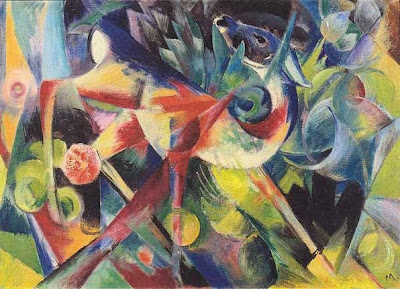
About the images. 1. Caspar David Friedrich, The Ice Sea: Wreck of the Hope, 1823-24. 2. Ludwig Mies van der Rohe, Model for a Glass Skyscreaper, 1922. 3. Hans Hartung, Abstract painting (Informalism, c. 1950s). 4. Franz Marc, Deer in a Flower Garden, 1913. 5. Max Liebermann, Beer-Garden in Brannenburg, 1893. 6. Karl Schmidt-Rotluff, The Girl from Kowno, 1918. 7. Käthe Kollwitz, Seed corn must not be ground, black chalk, 1942. 8. Anselm Kiefer, Shulamith (detail), 1983. 9. Anselm Kiefer, Margarete, 1981. 10. Philipp Otto Runge, Self Portrait, 1810. 11. Käthe Kollwitz, Mother and Twins, 1927.


Lectures and venues
1. "German Art: Its Peculiarities and Transformations"
Embassy of the Federal Republic of Germany, Islamabad
2. "The Artist, Modernity and German Society: Between Criticism and Approval"
National College of Arts, Rawalpindi
3. "The German Contribution to the Modern Visual Arts, 1500 to 1933"
Quaid-i-Azam University, Islamabad
4. "Reality and Imagination in the Visual Arts of Germany"
Fatima Jinnah Women University, Rawalpindi
5. "Art History: The German Case"
Islamabad College for Girls, Islamabad